Aircraft maintenance quoting that stays connected to the work
In a maintenance shop, the quote and the job drift apart easily. The RFQ arrives as a stack of documents. The quote gets revised by email. By the time labor and materials are booked, nobody can easily compare what was quoted with what was spent. Check MRO keeps those pieces in one workflow, from RFQ intake to an approved quote, then to a work order, then to a review of quoted against actual.
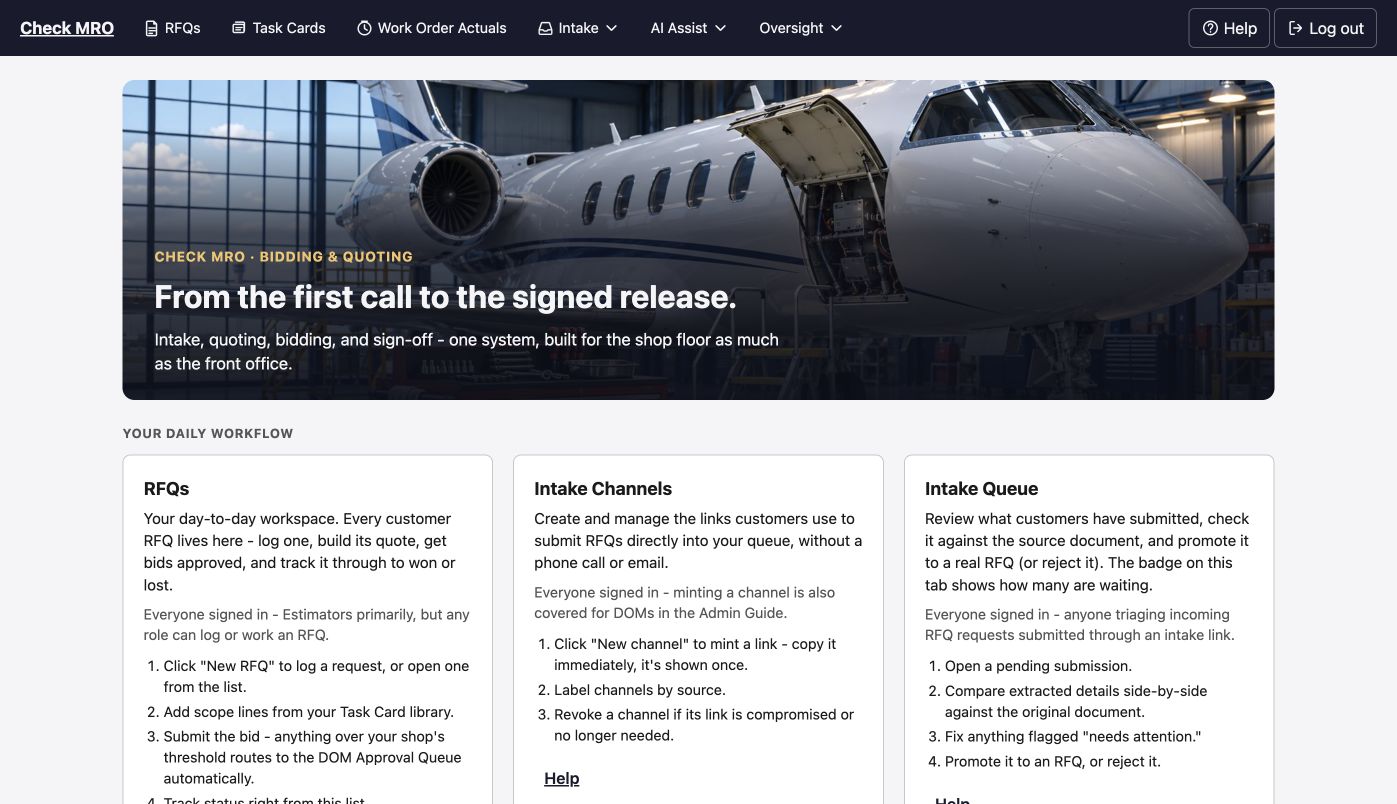
At a glance
Project: My own software, developed in aviation maintenance
- Type: Maintenance quoting and work-tracking software
- My role: Product design, workflow design and development
- Status: Working software · Demo on request
- Built with: TypeScript and Node.js; React and Vite; PostgreSQL; Docker Compose; optional S3-compatible storage
The workflow, step by step
1. RFQ intake with staff review
Incoming requests and their documents go into a single intake. Document extraction pulls out the key details and places them in a staging area, where staff check and correct them before anything goes into a quote. The software does the transcribing, and a person confirms what's right.
2. A scope library built from task cards
Common work is stored as reusable task cards in a scope library. Estimators build a quote from tasks the shop has defined before, so they aren't starting from a blank page every time, and similar jobs are quoted the same way.
3. Quotes that match how shops price work
Each quote can be flat-rate or time and materials, with materials itemized on their own lines. Quotes keep their versions and redlines, so everyone can see what changed between revisions. Approval thresholds send larger or unusual quotes to the right person before they go out.
4. Capability checks and bids
Before a bid goes out, capability checks compare the work with recorded ATA-chapter currency and task-card rating categories. Bids are submitted from the system, and wins and losses are tracked, so the shop builds a picture of what it wins and why.
5. Work orders and actuals
An approved quote becomes a work order, with the scope still attached. Labor and material actuals are recorded against it as the job progresses.
6. Quote versus actual
Because the quote and the work order stay linked, the system can compare what was quoted with what was actually spent. Over time, that's how a shop improves its estimates.
Inside the software
A workspace for the whole pipeline
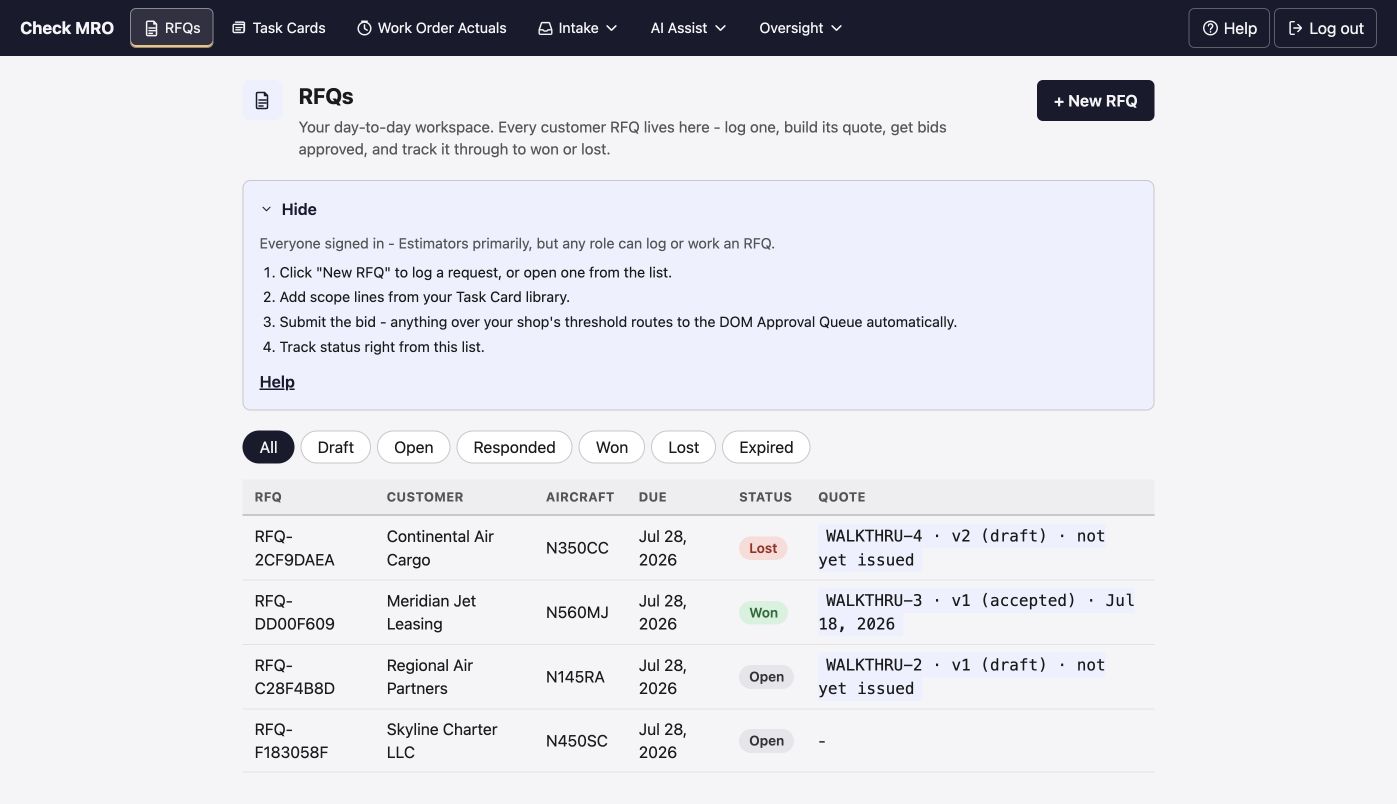
The RFQ workspace brings the customer, aircraft, response deadline, status and linked quote together. Filters separate drafts, open requests, responses, wins, losses and expired requests, so an estimator can quickly find the next job to work on.
Reusable scope, with the numbers attached
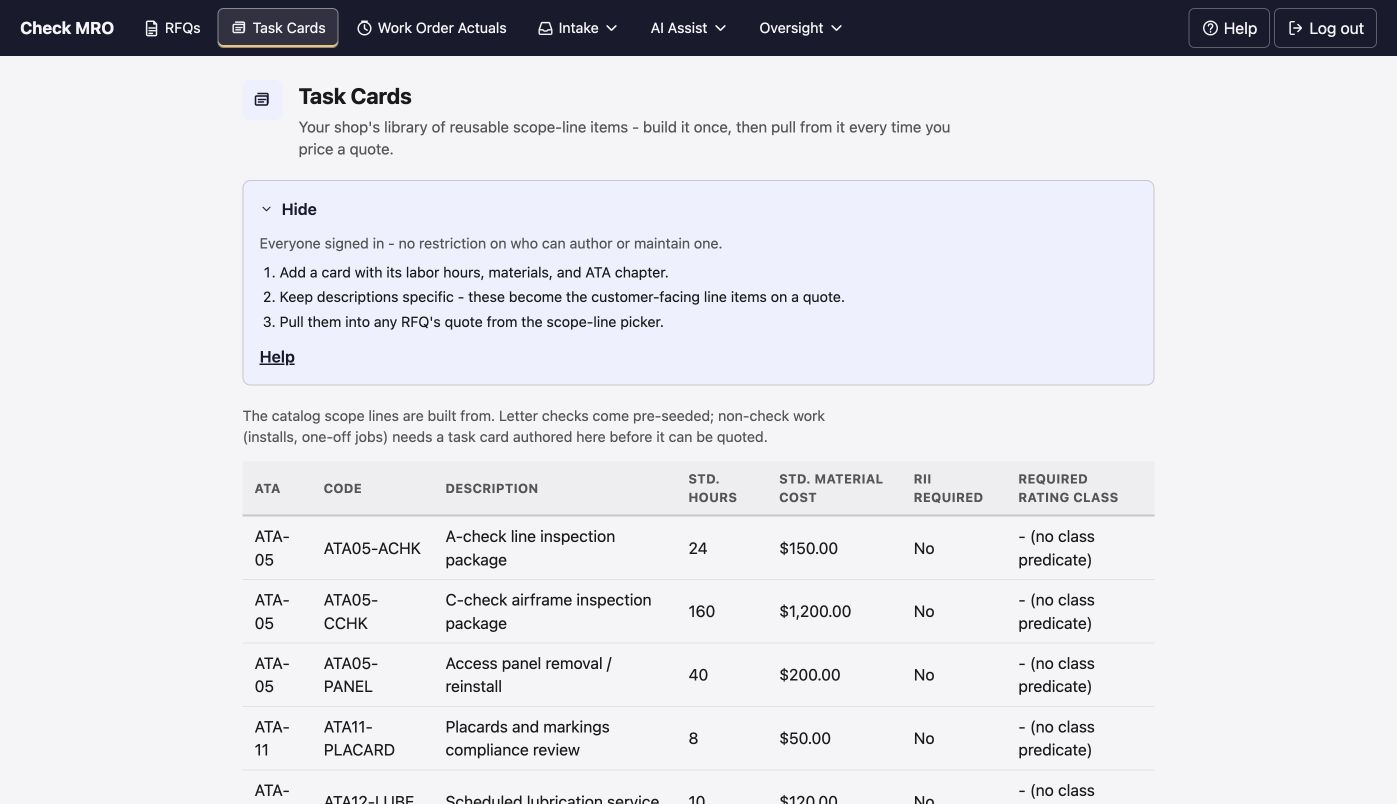
The task-card library organizes work by ATA chapter and code, with standard labor hours, material cost and rating requirements on each entry. That gives the shop a consistent starting point for pricing repeat work without losing the detail behind the estimate.
Quotes with a visible history
An RFQ opens into separate details, quote and bid views. The quote view shows its version, acceptance status, labor lines, rates and extended amounts. A revision stays connected to the original request rather than becoming another loose attachment in an email thread.
Why I built it
My background includes hands-on aircraft maintenance, and I've seen how much time goes into moving information between RFQs, quotes and work orders by hand. Check MRO is my answer to that problem: one connected record from the first request to the final numbers, with AI used where it saves real time and people making the decisions.
Technology and what it does here
TypeScript and Node.js: The application server and business logic for intake, quoting and work orders
- React and Vite: The staff-facing interface for reviewing intake, building quotes and tracking work
- PostgreSQL: Storage for RFQs, quotes and versions, work orders and actuals
- Docker Compose: Runs the full system as a consistent set of services
- S3-compatible storage (optional): Storage for RFQ documents and attachments
Do your quotes and jobs live in different places?
Whether you run an aircraft-maintenance shop, a machine shop or another business where estimates turn into jobs, I can build quoting and work-tracking software around how you actually price and deliver the work.